|





|
 |
 |
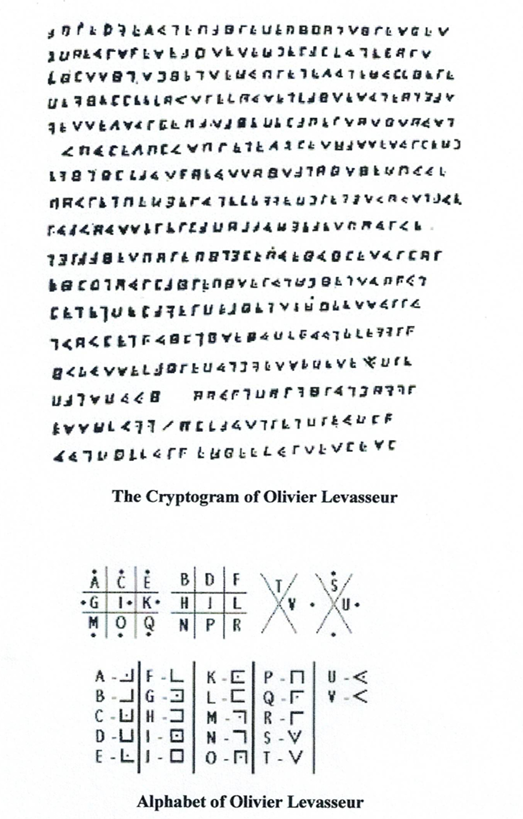
THE SEYCHELLES & FREEMASONRY Until the mid 20 th century, the history of Freemasonry in the Seychelles is a fragmented puzzle with very few traceable written records locally, thus it leaves the researcher bewildered and perplexed. The mention of Freemasonry, Masonic Lodges, names of the early settlers who were Masons and visitors to the islands who were also Masons, keeps popping-up from time to time in the Official Archives of the Seychelles and in other historical documents, both in Seychelles and elsewhere. The solution to this will take much more time and research before finding the answers to the allusive and enigmatic questions about Freemasonry in the Seychelles. A background of the Seychelles, the islands and the history is therefore necessary to enable the reader to comprehend and perceive what is described as the world's most beautiful archipelago. The Seychelles 115 pristine islands and atolls lie 1,000 miles off the Kenyan coast in the Indian Ocean, 4.40° South latitude and 55.0° East longitude. They are truly unique by a thousand miles. Seychelles' colourful history is full of political intrigue and satire. Nobody really knows who first saw the archipelago spread out over the Indian Ocean and it is impossible to say who first set foot on the islands that are now known as the Seychelles. It is fairly certain that Arab merchants must have known the islands about 1,000 years ago as they crossed the Indian Ocean. There are references about these islands lying south beyond the Maldives being sighted in the ninth century. In the sixteenth century Vasco da Gama came across the Amirantes (African Banks) which today are part of the Seychelles. This would appear to be the first reference to the group. Then in 1608 the East India Company through Alexander Sbarpeigh after a hectic journey, made a deviation on his voyage from the Arabian Sea and across the Indian Ocean, and his expedition thankfully made landfall in the Seychelles. He records that the islands were deserted having no natives and that the expedition was able to replenish the two ships, the Ascension and Good Hopf, with fresh water and spent ten days carrying out repairs. They were able to gather supplies from the plentiful bird colonies and with fish caught just a few yards offshore in the lagoons. They found coconut palms and split the nuts open for the white flesh and stored the coconut milk. The only danger was from "allagaters" but there were no reports of injury. In the report by John Jourdain he wrote, ''you cannot discern that ever any people had bene before us." In his report Jourdain also noted, "the men returned from land and brought soe many land tortells as they could carry." It was in 1742 that the French Governor of Mauritius, Bertrand Francois Mabe de Labourdannais, dispatched a French ship under the command of Lazare Picault. The expedition explored the unnamed islands and returned to Mauritius. It was not until fourteen years later that France took possession of the seven islands in the Mahe group. The first settlers arrived in 1770 and occupied the Island of St. Anne. Fifteen years later the settlers expanded and crossed to the Island of Mahe (seven Europeans and 123 slaves) the founding families of today's generations. Today the population of Seychelles numbers over 90,000. The first prominent Freemason was Raymond Hodoul who settled on La Digue Island. Many early settlers were known to have been Masons as they signed on the Land Registers with three dots after their names, usually as a triangle. There still exists a street in the Capital, Victoria, named Lodge Street. A Lodge under the jurisprudence of the Grand Orient of France was built there. The name of the Lodge and its location are not certain and more research at the Registrar of Deeds and at the Seychelles National Archives is necessary. Read MoreAnother Lodge existed at St. Louis (west of Victoria). The Lodge was named Loge Reunion Sincere under the Grand Orient de France. It closed in 1851. It was a large property and was later given to the Church of Rome for them to use as a school. We are informed by the former Catholic Bishop Felix Paul that it was located where the present Lower Belonie School stands, and formerly called the Saint Louis College. According to Paul Pascal de Giovani, a Frenchman from Paris who was the first Worshipful Master in the second Lodge in 1871, he said that the Masonic meeting place was at an unspecified location at La Rue Royale (now Revolution Avenue). It seems that the first Lodge at Saint Louis may have been located at what was the School of St. John Bosco. Behind it (along side the Serret Road) you can see the visible scars of the avalanche which occurred on the 12 th October 1862 which destroyed the Lodge School and killed two Sisters (Nuns). More research needs to be done. Another Lodge was situated at the ex Gemmel property (name unknown) and under the GLoF. The property is now owned by the Dhanjee family in the centre of Victoria. We have seen the Masonic Sword (Tyler's Sword) of Gemmell's with the late Kantilal Jivan Shah. During discussions with Kanti we concluded that the property of Gemmell was used as a meeting place for the Masons when the Lodge at Lodge Street was being built. However more in depth research is required. The late Kanti had some other documents relating to the Gemmell property. Jivan and Dhanjee were related. There is also a place named "Cap Mason" in South Mahe. We have not yet researched the significance of the name. Many places are named after the original owners and cartographers sometimes misspell the names. It would be wise to check on the two old land maps to see who the original owner of the land comprising "Cap Mason"was. Maybe he was a Mason? The great grandfather of the present Julien Durup, according to his family records, was a Mason. In 1871, Colonel Nicholas Pike (1818-1905) a Freemason and member of the Grand Orient de France, was sent to the Seychelles by the Governor of Mauritius, Sir Henry Barkly. Barkly was a Fellow of the Royal Geographical Society and Pike, his good friend, was the American Vice-Consul in Mauritius, who was also interested in zoology and botany. While in the Seychelles Colonel Nicholas Pike visited many islands and was impressed by the flora and fauna. During his visit to Mahe, he was accompanied by Julien Durup , whom he called his friend. He borrowed a Monte Christo rifle from Durup for him to shoot the fauna he needed to study. As a prominent Mason, Pike was impressed by the progress of Masonry in Mahe. He recorded in his journal the following:- "In the evening I visited the Masonic Temple......the Temple was filled with the leading men of the island and I was handsomely received by the officers and members of the Lodge with the honours due to me as SPRS of GOdF (Grand Orient de France). During that evening I witnessed two receptions (workings) which were conducted in true Masonic style...........and when the business of the Lodge was over, we adjourned to the banqueting room. After discussing the bountiful supply of good things provided, speeches were made and healths drunk, and I quitted the Temple with favourable impressions as to the progress of Masonry in Mahe." We think that a certain Mr. Cauvin was the Grand Master of this Lodge. The Freemasons were the pillars of early education in Seychelles and contributed immensely towards the upkeep of the early Roman Catholic priests and nuns on Mahe. In 1851 it was the Freemasons that assisted and took care of the Italian Capuchin, Father Leon (Michel) Golliet, born in Avanchers, Savoy. Father Leon was under the Italian Capuchin of Savoy, part of the congregation of Sardinia. Savoy was eventually ceded to France in 1860 after the reunification of Italy. Three years later in 1863 Rome decided to transfer the evangelization of the Seychelles into the responsibility of the French Capuchin of Savoy. The establishment of the Seychelles community of the Sisters of St. Joseph of Cluny, was, according to the annals in the Sister's archives, in response to a request of Father Jeremie Giantomommaso, born in Paglieta and Father Theophile (Charles Saturin) Polar and the Italian Prefect of the Seychelles in 1855. The request was sent to the Bishop Julien-Florian Felix Desprez of La Reunion (later to become a Cardinal on 12 th May 1879). Whilst Father Leon was visiting La Reunion, the Sisters of St. Joseph of Cluny there gave him 400 piastres to acquire a piece of land in Victoria for their intended Convent and school. At the time that Father Jeremie made his request to the Bishop in St. Denis, La Reunion, the church in Seychelles had no money to accommodate the incoming Sisters from La Reunion. Their arrival in Seychelles was made possible by the kind generosity of the Freemasons. It is an early record of one of the Freemasons many good deeds. It was a Freemason, Captain Etienne Nageon de L'Estang, who took the Sisters freely on his ship, the Lucie, from La Reunion to the Seychelles. Arriving at Mahe, the Sisters were welcomed by the clergy and by the Freemasons. They were accommodated at the old Freemasons' Lodge at Saint Louis. This old Lodge was gifted by the Masonic Brethren to Father Leon in 1851 to start a free school. It later became the first St. Joseph of Cluny Convent and School. As previously mentioned, the terrible avalanche of 12 th October 1862 took the lives of two of the Sisters. The school was badly damaged and the nuns sought temporary accommodation after the tragedy and were again cared for and assisted by the Freemasons of Seychelles. The building of the new Convent for the Sisters of St. Joseph of Cluny near the Cathedral in Victoria started in January 1863. A further request for nuns was made again to La Reunion and two more arrived later. Their former Convent and school at Saint Louis when repaired after the avalanche was assigned to the De La Salle Christian Brothers. This later became the Saint Louis College. Afterwards the college was occupied by the Marists Brothers. When the Marists Brothers departed the premises was once again run by the Sisters and was known as the School of Saint John Bosco. The Sisters of St. Joseph of Cluny are still here in Seychelles and more than 220 Sisters, mostly from Ireland and France have served the Seychelles over the years in the hospitals, but mostly in education. It can be seen that the Freemasons were the pillars of early education and gave freely to contribute to the upkeep of the Catholic Priests and Nuns on Mahe. The Roman Catholic Archives have documentation on the Freemasons and that they were the early Confrerie of the Church. At La Digue Island, the most prominent Mason was Nageon de L'Estang, a very intelligent egalitarian gentleman. His tomb is at the cemetery at La Source D' Argent. He was unique in his idealism and his former slaves are buried alongside him and his family. It can be seen from the various (incomplete) records that Freemasonry was in existence in the Seychelles since the beginning of the French Colonisation. These early settlers belonged to the Grand Orient de France (GOdF) which was founded in 1728 as the oldest Masonic jurisdiction in Europe. As such, more research needs to be undertaken by studying the historical archives of the GOdF. At the time of the arrival of the first settlers in Seychelles at St. Anne Island in 1770, the Grand Orient de France controlled 60 Lodges in Paris, 488 in Provence and about 40 in the Colonies. Amongst the members were priests and some very high Church dignitaries. It can be said that the Freemasons with their egalitarian principles contributed to the French Revolution. The Freemasons suffered immensely under the Lieutenant General of Police in Paris, Rene Herault de Vaucresson and the Lawyer Maximilien Francois de Robespierre. Robespierre was a member of the Jacobin Club. He was a politician who declared himself as being "neither a monarchist nor a republican." He fell out of favour and was executed in Paris on the 28 th July, 1794 aged 36. Robespierre had argued that although he abhorred the death penalty administered by law, he had no love for Louis XVI and called for his execution. Louis XVI was executed on the 23 rd January 1793. Barely eighteen months later Robespierre suffered the same fate. During the period prior to the French Revolution, many fled France to the relative safety of the Colonies. Some sought refuge and a country of shelter by changing their names and emigrating to La Reunion, Mauritius and the Seychelles. It is interesting to note that the Lieutenant General of Police in Paris, Rene Herault remarried after the death of his first wife (1729) to Helene Moreau de Sechelles in 1732. She was the daughter of Jean Moreau de Sechelles (who later became the French Minister of Finance) and who gave his name to the Seychelles archipelago. Prior to the French Revolution, the Roman Catholic Church decree of 1756, banned the clergy and all Catholics from joining Freemasonry. However, this was not implemented in France. The French Parliament had ignored the Pontiff's instructions. Amongst its members were many Priests and some high Church dignitaries. After the Revolution the Corsican Emperor, Napoleone Bonaparte took control of French Freemasonry for political power. Later the French Masons learned that Napoleone had named his brother Joseph as the Grand Master of the Grand Orient de France. Napoleon's father and even his wife Josephine were later made Freemasons. However, Napoleone himself was never a Freemason. Whilst searching the old Land Registers of the Seychelles, the following has been found:- JEAN JACQUE FAURRE, a landowner at Mahe, arrived in the Seychelles from Frejus, Var, France and married on 3 rd January 1803 at Mahe to Jeanne Marie Beauregard, daughter of Julien Michel Beauregard and Madeleine Pottier of Vitre, Ille et-Vilaine, in Britany France. He acquired from ANGE JOSEPH MARIE CORDOUAN, the Freemasons' Lodge known as "Loge La Reunion Sincere" with a plot of land of over 5 arpents (about 7 acres) situated at Mahe on 30'h October 1831. The French Revolution had no harsh effect on the Freemasons of Seychelles. However, ten years after the Revolution a wonderful fraternal Freemasonry episode gave birth to the colonization of the Island of La Digue on the 8 th June 1798. This came to light because the Captain and the officers of the ship "La Laurette" were Masons. Captain Cadet Loizeau was given the responsibility by the authorities in La Reunion to transport 21 rebellious deportees who were condemned to death from La Reunion to be dropped off at any suitable part of India. Captain Loizeau left La Reunion on the 8 th June 1798 after noting that there were four Brother Masons amongst the deportees, including one Lazarist Priest, who was the group leader. To save his Brother Masons Captain Loizeau sailed directly to the Seychelles instead of to India. They arrived at Mahe where the authorities sent them to La Digue where they arrived on the pt July, 1798. Captain Loizeau's testimony for this defiant episode stated that "it was in very bad weather that the deportees had overpowered him and his officers and ordered him to sail directly to the Seychelles." Little is known why the Seychelles authorities did not ask Captain Loizeau to press charges against the deportees (maybe the authorities in Seychelles were also Freemasons?). Most of the deportees were sent to La Digue. However, Jean Lafosse, a Parisian Priest and his Masonic Brother, Louis Henry Jerome Dumont and other Freemasons were exiled on Praslin instead of La Digue. Dumont was born in Poitiers, Vienne, France and was a former tax collector to the King. At Praslin they settled at the place presently named Anse Dumont at Cote d'Or. Dumont later became a Notary and died at Mahe. The original plans for Victoria at the National Archives are the first Masonic Plans of Victoria. These were made by a Freemason, Charles Theodore Hoart in about 1820. Hoart was born in Paris, the son of Pierre Denis Hoart and Francoise Rosalie Deverre. He was the government surveyor of Mauritius and was sent on a mission to the Seychelles in 1820. It seems that his first job was to resurvey Praslin Island, which he completed on 12 th August, 1820. During a sojourn he married on the 8 th October, 1822 to Seychelloise, Julie Perrine Henriette Loizeau, the daughter of Jean Auguste Loizeau and Laurence Elizabeth Henriette Cazalos of Mauritius. Hoart received a land concession at La Poudriere Mahe. He later, together with Pierre Marie Hibon, acquired the Island of Curieuse. It was interesting to note that his brother W. Hoart, was also a surveyor by profession. It is not clear which one was sent to survey Rodrigues Island in 1825. However, in 1824 both of them went together to survey Diego Garcia. Towards the early 18 th Century, pirates arrived in the Indian Ocean from the Caribbean and made base in Madagascar, where they preyed upon vessels approaching and leaving the Red Sea and the Gulf. We can imagine that these pirates made good use of the Seychelles Islands as a hiding place and refreshment stop, (afterall, the same seems to be happening today, with the Somali pirates who are dominating the Western Indian Ocean and preying on ships from the Red Sea and Gulf of Aden down to the Seychelles and as far as Madagascar). This article on the History of Freemasonry in the Seychelles will be incomplete without mention of Olivier Levasseur. Born in Calais in 1690 during the Nine Years' War (1688- 1697), Levasseur was a pirate, nicknamed La Busse or La Bouche (The Buzzard) called thus because of the speed and ruthlessness with which he always attacked targets. He was born to a wealthy bourgeois family, and became a naval officer after receiving an excellent education. During the War of the Spanish Succession (1701-1714), he procured a Letter of Marque from King Louis XIV and became a privateer for the French crown. When the war ended (he was then only 24) he was ordered to return home with his ship, but instead joined the Benjamin Hornigold Pirate Company in 1716. Levasseur proved himself a good leader and shipmate, although he already had a scar across one eye, limiting his vision. After a year of successful looting, the Hornigold Pirate Company split up, with La Busse trying his luck off the Western African Coast. In 1719 he was operating with Howell Davis and Thomas Cocklyn for a time. In 1720 they combined to attack the slaver port of Quidah, on the coast of Benin, reducing the fortress there to ruins. Later that year, he was shipwrecked in the Mozambique Channel and stranded on the island of Anjouan (Comores). His bad eye became completely blind and thereafter he started wearing an eyepatch. From 1721 onwards he launched his raids from a base on the island of Saint-Marie, just off the coast of Madagascar, working together with two other pirates John Taylor and Edward England. They first plundered the Laccadives Islands, off the coast of Kerela (Goa), these islands lie at the hub of the Arabian-African-Asian trade routes. The plundered loot they sold to Dutch traders for £75,000 (adjusted for 2012's value of £11,5 million). Levasseur and Taylor eventually became tired of Edward England's manners and marooned him on the island of Mauritius. They then perpetrated one of piracy's greatest exploits. The capture of the Portuguese galleon Nossa Senhora do Caho (Our Lady of the Cape) or Virgem do Caho (The Virgin of the Cape), which was fully loaded with treasures belonging to the Bishop of Goa, who was also called the Patriach of the East Indies and the Viceroy of Portugal, who were both on board returning home to Lisbon. The pirates were able to board the vessel without firing a single broadside, because the Caho had been damaged in the storm, and to avoid capsizing the crew had dumped all of its 72 cannons overboard. This extraordinary incident was later used by Robert Louis Stevenson in his novel " Treasure Island." Levasseur and Taylor took the galleon easily and loaded the plundered booty onto their ships. It consisted of hundreds of gold and silver bars, dozens of chests full of gold Guineas, diamonds, pearls, silk and many religious objects from the Santa Catarina Cathedral in Goa, including the unique and huge Flaming Cross of Goa made of pure gold and inlaid with diamonds, rubies and emeralds. It was so heavy, that it required three strong men to carry it over to Levasseur's ship. In fact the whole treasure was so huge (estimated at over £200 million in 2012), that the pirates did not even bother to rob the people on board the galleon, something they normally always did. When the loot was divided, each pirate received at least £50,000 of golden Guineas (adjusted for todays value in 2012, about £7,5 million), as well as 42 diamonds each. Levasseur and Taylor split the remaining gold, silver and other objects, with Levasseur taking the Flaming Cross of Goa. We are unable to establish exactly when Olivier Levasseur became a Freemason, but we do know that he was a Deist which was popular in the 17 th and 18 th centuries. Deism was the belief in a "Creator" or a "Supreme Being". It is perhaps the reason why so many Deists were also members of early Freemasonry in Europe. In 1724, Levasseur sent a negotiator to the Governor of the Island of Bourbon (today Reunion), to discuss amnesty which had been offered to all pirates in the Indian Ocean who were prepared to give up their practice. However the French government wanted a large part of the stolen loot themselves, so Levasseur decided to avoid the amnesty and went into hiding on the Seychelles archipelago. It is believed that Levasseur hid his treasure hoard in the Seychelles near Bel Ombre, on Mahe. He was eventually captured near Fort Dauphin, Madagascar. He was taken to Saint Denis, La Reunion and hanged for his crimes of piracy at 5pm on the 7 th July, 1730. Legend tells that when he stood on the scaffold he had a necklace and locket around his neck, containing a cryptogram of 17 lines, written in the Masonic alphabet (still used in Mark Masonry today), and he threw his necklace to the crowd exclaiming: "Find my treasure, ye who may understand it!" She found carvings of a dog, snake, turtle, horse, fly, two joined hearts, a keyhole, a staring eye, a ballot box, a figure of a young woman's body, and the head of a man. A notary public in Victoria on hearing this news understood that these symbols must have been made by pirates. He immediately searched the National Archives and found two possible connections. The first was a map of the Bel Ombre beach, published in Lissabon in 1735. It stated: "owner of the land......La Busse" (Levasseur). The second discovery was the last Will and Testament from the Corsair and Privateer (pirate) Bernardin Nageon de L'Estang, nicknamed Le Butin, who died 70 years after Levasseur and who claimed to have possession of some of Levasseur's treasure. It contained 3 cryptograms and 2 letters, one to the nephew of Levasseur: "I've lost a lot of documents during shipwreck. I've already collected several treasures; but there are still four left. You will find them with the key to the combinations and in other papers." The second letter to his brother: "Our captain got injured. He made sure I was a Freemason and then entrusted me with his papers and secrets before he died. Promise your oldest son will look for the treasure and fulfill my dream of rebuilding our house......The commander will handover the documents, there are three." The notary public in Victoria contacted Mrs. Rose Savy and after some excavations at the "Staring Eye" they discovered two coffins containing remains of two people, indentified as pirates by the gold rings in their left ears, as well as a third body without a coffin, but no treasure was found at this location.
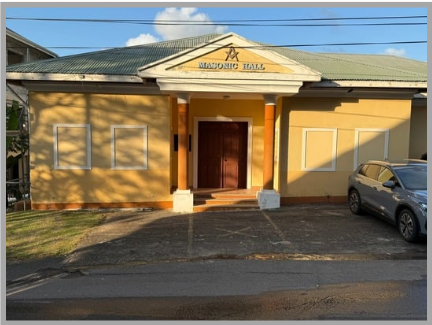
In 1947 Englishman Reginald Cruise-Wilkins, a neighbour of Mrs. Rose Savy, studied the documents, but the cryptogram was much more difficult to solve than first believed. Deciphering it could be carried out only by starting from the two letters and the three cryptograms compiled in a mysterious alphabet, a rebus, or at least in initiatory writing which could be put in relation to Masonic symbolism. Cruise-Wilkins then discovered a connection with the Zodiac, the Clavicles of Solomon, and the Twelve Labours of Hercules. Various tasks, representing the Labours of Hercules, had to be undertaken in strict order. The treasure chamber is somewhere underground and must be approached carefully, to avoid being flooded. It is protected by the tides, which requires damming to hold them back, and is to be approached from the north. Access is through a stairwell cut into the rocks, and tunnels leading under the beach. Until his death at Reunion, Cruise-Wilkins sought and dug at Bel Ombre on the island of Mahe. In a cave, except for old guns, some coins, and a pirate sarcophagi, he did not find anything else. He died on 3 rd May, 1977 before breaking the last piece of code. His son, Seychellois history teacher John, is currently still seeking the treasure, concluding that after using state-of-the-art equipment, he needs "to go back to the old method, (getting) into this guy's mind, saying he is ten down and two to go in his Herculean Labours". Thus we arrive at the present time. Freemasonry is very much alive and well in the Seychelles under the United Grand Lodge of England and forms part of the District Grand Lodge of East Africa. From the aforegoing it can be seen that Freemasonry was active in the Seychelles in the 18 th and 19 th Centuries and indeed existed many years before the Lodge East Africa No.3007 EC was consecrated in Zanzibar in 1903. It was in the early 1960's that the Seychelles colonial Government was informed by the British Foreign Office that it had decided to build a deep water Port at Victoria and also an International Airport for the purposes of expanding the tourism trade to the islands. The projects were eventually agreed upon and additional expatriate civil servants were transferred to Seychelles, and amongst these new arrivals were Freemasons. In July 1965, these Freemasons started to meet regularly at each others houses. This saw the start of the "FOUR SQUARE CLUB". Word of these informal meetings spread and many new faces appeared, especially from the USAF Satellite Tracking Station which existed at that time. The "Four Square Club" held their informal meetings on the second Wednesday of each month and kept written Minutes of their meetings (which are carefully preserved by the Seychelles Lodge). Eventually these Brethren decided to construct a small Masonic Hall on land donated by one of the Senior Brethren, W. Bro. Norman Burnett. Although the members of the "Four Square Club" wrote to the District Grand Secretary of East Africa in the late 1960's on several occasions, nobody really took them seriously. In the early 1970's the enthusiasm to establish a Lodge increased. However, the letters sent to District remained unanswered. Sometime in 1974, the Brethren of the "Four Square Club" managed to get in touch with Sir James Stubbs whilst in Seychelles on his way back to U.K. from a visit to the Far East and South East Asia. It was then that things started to move forward. A Petition for a New Lodge under the sponsorship of Lodge Harmony No.3084 EC of Nairobi was eventually submitted to the District Grand Secretary, W.Bro. David Richmond, in late 1976. The Petition was signed by 28 petitioners, our original Founders. On Wednesday 14 th September, 1977 at 3.30 p.m. the Ceremony of Consecration of the Seychelles Lodge 8789 EC was conducted by the Right Worshipful Brother Douglas Duncan, the District Grand Master of the District Grand Lodge of East Africa. Thus English Freemasonry was born in the Seychelles after 12½ years of the determined efforts of the members of the "FOUR SQUARE CLUB". CONSECRATION - TODATE At the beginning, except for founder member the late Bro. G. J. Morel, the Lodge consisted of expatriates either resident or working in the Seychelles. This, however was to change soon and in May 1978 the first Seychellois, the late W.Bro. Jemmy B. Wadia was initiated. The trend of Seychellois coming up for initiation was slow at the beginning, probably due to the fact that 95% of the population are Roman Catholic. The year 1983 was to be the turning point, as in September the late W.Bro. Jemmy B. Wadia was installed into the chair of K.S. as the first Seychellois Master. This trend has continued with the exception of three, W.Bros. Seeger, Brewer and Kwast, who, although not Seychellois are considered as such due to their period of time in Seychelles. Today over 50% of the total members are residents of Seychelles with an average attendance of 60-70%,. Those attracted to masonry are generally in the 40-45 year old age group which is good sign. |
|||||
 |
||||||
The Seychelles Lodges. Marie Laure Drive, Mount Simpson Estate, Belombre, Mahe, Seychelles. Email: admin@seychelleslodges.org © The Seychelles Lodges. All rights reserved. 2025 |